

Stress Management for Clear Skin: How Cortisol Triggers Breakouts (And What to Do About It)
You’ve nailed your skincare routine. Every product is toxin-free and non-comedogenic. Your diet? Anti-inflammatory. You’re taking all the right supplements.
Yet somehow, breakouts still show up – especially during crazy-stressful periods.
Sound familiar? Here’s what most people miss: stress management for clear skin isn’t optional. It’s essential. While you can control what goes on your face, chronic stress creates internal chaos that sabotages everything you’re doing externally.
But here’s the good news – once you understand how stress triggers breakouts through cortisol elevation, you can implement three simple daily practices that transform your skin from the inside out. And no, you don’t need hours of meditation or a perfect yoga practice. (Thank goodness, because who has time for that?)
Why Stress Management for Clear Skin Actually Matters
When you’re stressed, your body releases cortisol – your primary stress hormone. Short bursts? Totally normal and protective. Chronic elevation, though? That wreaks absolute havoc on your skin.
Additionally, stress management for clear skin is one of four essential pillars in my holistic approach, alongside toxin-free skincare, targeted supplementation, and anti-inflammatory nutrition.
Here’s what elevated cortisol does to your skin:
First, it signals your sebaceous glands to produce excess oil. More oil means more clogged pores. Furthermore, cortisol triggers inflammation throughout your entire body, which directly contributes to those angry, red breakouts.
Worse yet, chronic stress weakens your skin barrier function. Consequently, your complexion becomes more vulnerable to irritation and bacterial overgrowth.
Beyond the direct skin impacts, stress disrupts your sleep quality. Poor sleep further elevates cortisol, creating a vicious cycle that’s hard to break. Meanwhile, stress affects your gut health – and we know gut inflammation literally shows up on your face.
Finally, high cortisol levels interfere with hormone balance. This particularly affects estrogen and testosterone ratios that influence sebum production.
The research backs this up: people with acne show significantly higher cortisol levels than those with clear skin. Studies demonstrate that during exam periods, students experience increased breakouts correlated with elevated stress hormones. Moreover, chronic stress delays wound healing, meaning your existing blemishes take longer to resolve. (Fun times, right?)
The Cortisol-Acne Connection: What’s Actually Happening Inside Your Body
Understanding the mechanism helps you appreciate why stress management for clear skin actually works – this isn’t just woo-woo wellness talk.
When you perceive a threat (work deadline, relationship conflict, financial worry), your hypothalamus activates. This triggers your pituitary gland, which signals your adrenal glands to release cortisol.
In acute situations, this response is brilliant. Cortisol mobilizes energy, sharpens focus, and prepares you for action. Problems arise when this system never turns off.
Modern life keeps most of us in constant low-grade stress. Therefore, cortisol stays persistently elevated, and your skin pays the price.
Here’s what happens under chronic cortisol exposure:
Increased Oil Production: Cortisol stimulates your sebaceous glands directly. These glands respond by producing more sebum than your pores can handle. Consequently, you experience more clogged pores and comedones.
Inflammation Cascade: Cortisol paradoxically increases inflammatory cytokines over time, despite being anti-inflammatory in acute situations. This systemic inflammation manifests as red, angry, inflamed acne lesions.
Barrier Disruption: Your skin barrier relies on ceramides, cholesterol, and fatty acids working together. However, chronic stress depletes these essential components. As a result, your skin becomes vulnerable to irritants, bacteria, and moisture loss.
Hormonal Imbalance: Cortisol interferes with sex hormone production and binding. In women, this exacerbates hormonal acne patterns around the jawline and chin. For men, stress-induced hormone fluctuations affect sebum quality and production.
Gut-Skin Axis Disruption: Stress significantly impacts gut permeability and microbiome diversity. Since 70% of your immune system lives in your gut, this disruption directly influences skin inflammation and acne severity.
My Personal Breakthrough: When I Finally Addressed the Stress Piece
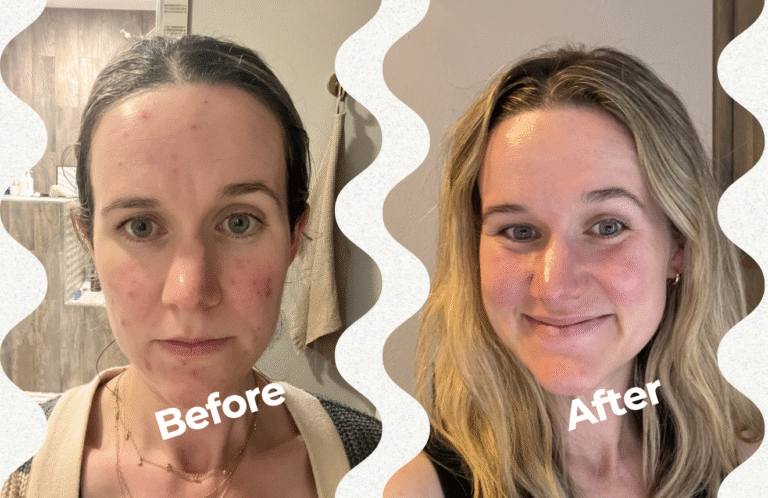
For over 20 years, I struggled with chronic acne. Even after eliminating toxic and comedogenic ingredients from my routine (you can check your own products here), implementing an anti-inflammatory diet, and taking targeted supplements, I still experienced regular breakouts.
Something was missing.
Looking back, my stress levels were absolutely through the roof. As an Industrial Engineer with a demanding full-time career, a side business, and two young children, I was running on pure adrenaline. Sleep was minimal. My nervous system never got a break.
Initially, I dismissed stress management as too “soft” compared to tangible interventions like changing products or adding supplements. That mindset kept me stuck.
Once I actually implemented consistent stress management for clear skin practices, though? Everything changed.
Within the first month of prioritizing stress reduction, my skin stayed clearer longer. Breakouts became less frequent and less severe. More importantly, existing blemishes healed faster instead of lingering for weeks.
The transformation wasn’t just about my skin. My energy improved, sleep quality increased, and hormonal symptoms stabilized.
The lesson? You can have the most perfect skincare routine in the world. But if your cortisol is chronically elevated, your skin will continue struggling.
The 3 Most Powerful Stress Management for Clear Skin Techniques
Here’s what actually works – simple, practical strategies that fit into your real life and directly impact your cortisol levels.
1. Switch to Low-Impact Workouts
High-intensity exercise spikes cortisol even more when you’re already stressed. That HIIT class you’re forcing yourself through? It might be making your skin worse.
Walking, pilates, gentle yoga – these actually lower cortisol. Twenty minutes of low-impact movement beats an hour of HIIT for your skin when you’re in a high-stress season.
Your body doesn’t know the difference between work deadline stress and brutal workout stress. Both trigger cortisol release. When you’re already dealing with chronic stress, adding intense exercise becomes the straw that breaks the camel’s back.
Instead, focus on movement that calms your nervous system while keeping you active. Morning walks in natural light are particularly powerful because they regulate your cortisol rhythm. Gentle yoga or stretching before bed signals to your body that it’s safe to rest and repair.
2. Mouth Tape at Night
This sounds weird, but hear me out. When you’re stressed, you mouth breathe during sleep. Unfortunately, mouth breathing dries out your mouth, disrupts your oral microbiome, and triggers inflammatory responses that show up as breakouts.
Nasal breathing activates your parasympathetic nervous system and optimizes oxygen exchange. More importantly, it maintains proper oral pH and microbiome balance, which directly influences skin inflammation.
I use PFA-free mouth tape every single night. You can find my specific recommendation in my holiday gift guide. Within two weeks of consistent use, most people notice improved sleep quality, reduced morning puffiness, and clearer skin.
Start with just a small piece of tape across the center of your lips. You don’t need to seal your entire mouth. Your body will naturally adapt to nasal breathing within a few nights.
3. Castor Oil Packs on Your Liver
Your liver processes stress hormones like cortisol. When it’s overloaded, those hormones recirculate and trigger acne. Supporting your liver function is one of the most overlooked aspects of stress management for clear skin.
A castor oil pack for 30 minutes, 2-3x per week while you sleep, supports your liver in clearing hormones. This isn’t woo-woo – it’s a traditional therapy that increases circulation and lymphatic drainage to your liver, helping it process and eliminate stress hormones more efficiently.
Here’s how to do it: Apply organic castor oil to your upper right abdomen (where your liver lives). Cover with a clean cloth, then place a heating pad on top. Leave it on overnight and remove when you wake up.
Consistency matters more than perfection. Even twice per week makes a noticeable difference in how quickly your skin recovers from stress-induced breakouts.
Start With Just One Practice This Week
Clear skin isn’t just about what you put ON your face. It’s about how you support your whole body – including giving your nervous system the tools it needs to handle stress without triggering breakouts.
Effective stress management for clear skin doesn’t require perfection. It requires consistency with practices that actually work.
Ready to take the next step? Follow this guide to learn my entire methodology following my four-pillar methodology.
Start with ONE of these stress management practices this week and see what happens. Your skin (and your nervous system) will thank you.





2 Comments