Squalane for Acne: Why This $10 Oil Is My Secret Weapon for Clean Skin
Okay, real talk: I’m SO excited to share this with you because this one product literally changed how I think about cleansing.
For years, I was using harsh makeup removers that stripped my skin (hello, micellar waters with questionable ingredients and wipes with alcohol). I thought that’s just what you had to do to get your makeup off, you know? But my skin was constantly tight, irritated, and ironically… breaking out MORE.
Then I discovered squalane. Not as a moisturizer (though it’s amazing for that too), but as the FIRST step in my cleansing routine. And I’m not exaggerating when I say it’s been a complete game-changer.
If you’ve been struggling to find a makeup remover that doesn’t cause breakouts, keep reading. This might just be the solution you’ve been looking for.
What Is Squalane? (And Why Your Skin Already Knows It)
Here’s where my engineering brain gets excited: squalane is basically identical to the oil your own skin produces naturally.
Your skin creates something called sebum (that’s the oil on your face), and up to 12% of that sebum is actually a lipid called squalene (with an “e”). When you’re young, your body produces tons of it. However, as you age, those levels drop significantly. That’s why more mature skin often feels drier and reaches for moisturizers more often.
Now here’s the cool part: squalane (with an “a”) is the hydrogenated, stable version of that naturally occurring squalene. Because your skin already produces squalene, when you apply squalane topically, your skin recognizes it immediately. It absorbs quickly, feels lightweight, and doesn’t leave a greasy film.
But here’s what makes squalane perfect for acne-prone skin: it’s non-comedogenic. That means it won’t clog your pores.
Squalane vs. Squalene: Why the “A” vs. “E” Makes All the Difference
Okay, here’s where it gets really important (and honestly, kind of fascinating if you’re a science nerd like me).
Squalene (with an “e”) is naturally found in your skin’s sebum, but here’s the problem: it’s incredibly unstable. When squalene is exposed to air, it oxidizes almost immediately. That oxidation process turns it rancid, and rancid oils are NOT something you want on your face.
When squalene oxidizes, it can:
- Trigger inflammation
- Contribute to clogged pores
- Actually cause breakouts instead of preventing them
- Generate free radicals that damage your skin
So even though your body produces squalene naturally (and it’s fine when it’s inside your skin doing its job), you can’t just extract squalene and slap it on your face. It would start breaking down before you even got it home from the store.
Squalane (with an “a”), on the other hand, is the hydrogenated version. That means hydrogen molecules have been added to stabilize it. This hydrogenation process:
- Prevents oxidation (it won’t go rancid)
- Makes it shelf-stable
- Keeps it non-comedogenic
- Allows it to deliver all the benefits without the risks
So basically: your skin produces squalene naturally and uses it internally just fine. But for topical use, you need squalane – the stable, non-comedogenic version that won’t oxidize and cause problems.
That’s why when you’re shopping, you always want to see “squalane” (with an “a”) on the ingredient list. If a product lists “squalene” (with an “e”), it means it hasn’t been properly stabilized and could potentially cause issues for acne-prone skin.
Make sense? This is exactly the kind of subtle ingredient difference that can make or break your skin – and why I’m SO passionate about ingredient education!
Why Squalane for Acne Works (My Dual-Methodology Approach)
You’ve probably heard me talk about this before, but it’s worth repeating: a product needs to be BOTH toxin-free AND non-comedogenic to get my seal of approval.
Here’s why squalane passes both tests:
Test #1: Is it toxin-free?
100% plant-derived squalane (like the one I recommend from The Ordinary) contains literally ONE ingredient: squalane. No fillers, no fragrance, no preservatives, no ethoxylated compounds. Just pure, clean squalane derived from sugarcane or olives. ✓
Test #2: Is it non-comedogenic?
Squalane has been extensively studied and consistently scores as non-comedogenic. Unlike heavy oils like coconut oil (which is highly comedogenic) or even some “clean” oils like olive oil, squalane won’t clog your pores. In fact, it’s one of the safest oils for acne-prone skin. ✓
This is exactly why I recommend it for the first step in cleansing, especially if you wear makeup or sunscreen.
How I Use Squalane as a Makeup Remover (The First Cleanse)
Alright, here’s my actual routine and why it works so well.
Step 1: Apply squalane to dry skin
I take about 3-5 drops of pure squalane and massage it all over my face while my skin is still completely dry. This includes my eye makeup (yes, even waterproof mascara). I massage gently for about 30-60 seconds.
Why this works: Oil dissolves oil. Your makeup, sunscreen, and excess sebum are all oil-based. Squalane breaks them down without stripping your skin or introducing harsh surfactants.
Step 2: Gently wipe away with a damp washcloth
I use a warm, damp washcloth to gently wipe away the squalane and all the dissolved makeup. No tugging, no rubbing. Just soft, gentle pressure.
Step 3: Follow with your regular cleanser
Then I use my regular facial cleanser (check my recommendations for non-comedogenic cleansers here) to remove any remaining residue and actually cleanse the skin.
This two-step process is sometimes called “double cleansing,” and it’s been used in Korean skincare for decades. But instead of using a fancy cleansing oil with 15 ingredients (half of which might be comedogenic or contain synthetic fragrances), I’m using ONE ingredient: squalane.
The result? My makeup comes off easily, my skin feels soft (not stripped), and I’m not introducing any pore-clogging ingredients that could trigger breakouts.
Why Squalane Is Better Than Traditional Makeup Removers
Let me compare this to what I used to use (and what most people still use):
Makeup wipes: Contain alcohol, fragrance, and preservatives. They don’t actually remove everything and can cause micro-tears in your skin from rubbing. Plus, they’re terrible for the environment.
Micellar water: Often contains synthetic surfactants and preservatives. Some formulas work okay, but many leave residue and don’t fully remove waterproof products.
Oil-based makeup removers: Can work well, but many contain comedogenic oils or synthetic fragrances. You’re also paying $20-40 for a bottle when you could use pure squalane for $10.
Cleansing balms: Same issue as oil-based removers – they often contain emulsifiers and fragrances that can irritate sensitive or acne-prone skin.
Squalane gives you all the benefits without the problematic ingredients. Plus, if you have any left on your skin after wiping it away, it actually acts as a lightweight moisturizer. Win-win.
The Squalane I Recommend (And Why It’s Only $10)
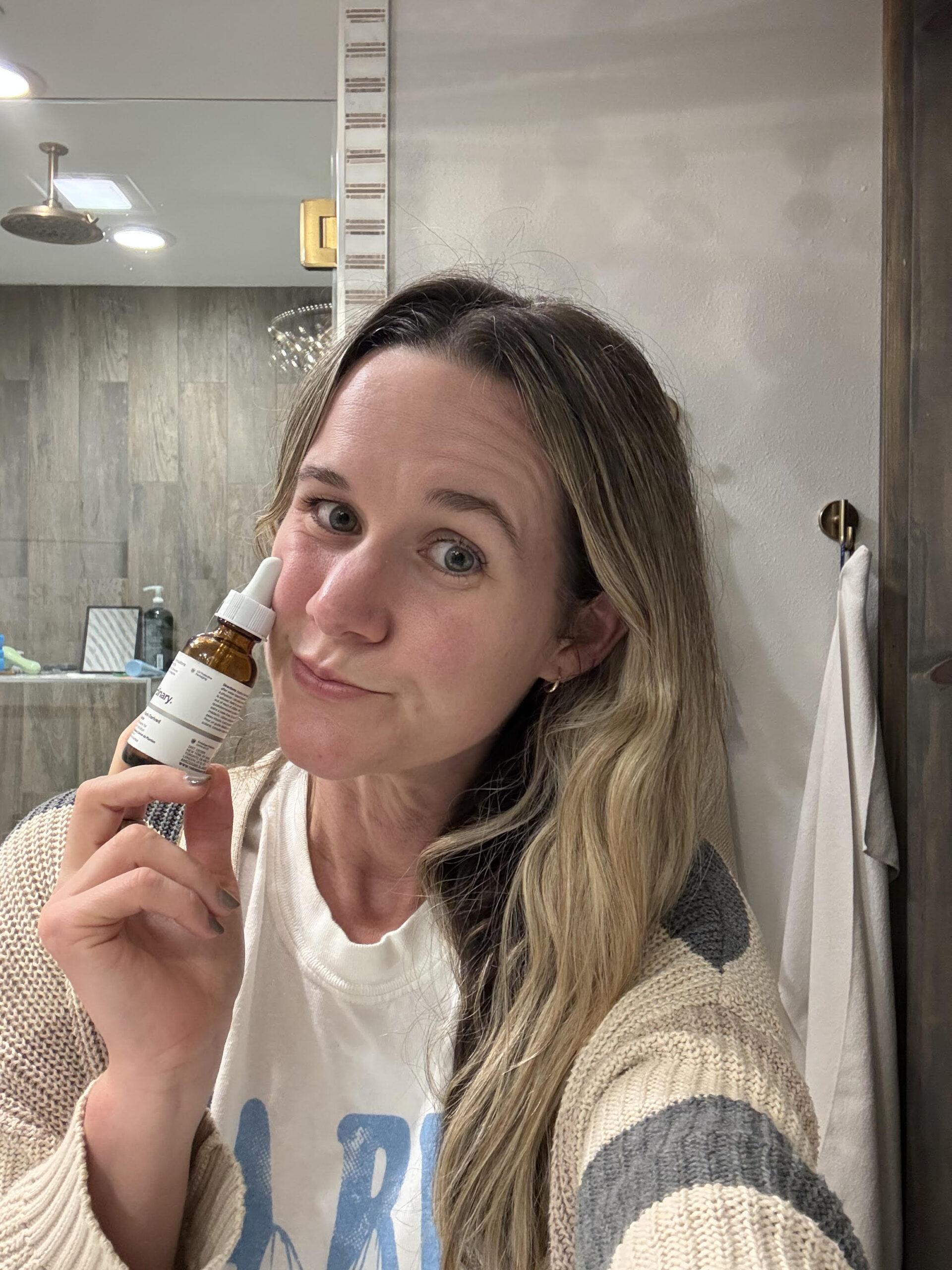
I’m genuinely obsessed with The Ordinary’s 100% Plant-Derived Squalane.
Here’s why:
- One ingredient: Just squalane. No fillers, no BS.
- Plant-derived: Sourced from sugarcane, not shark liver (more on that in a second)
- Non-comedogenic: Verified through my ingredient database
- Affordable: Around $10 for a 30ml bottle, which lasts MONTHS when you’re using it as a makeup remover
Quick note about sourcing: Squalane can be derived from shark liver or from plants (sugarcane or olives). Obviously, we want the plant-derived version for ethical reasons. The Ordinary uses plant-derived squalane, so you’re getting a clean product with a clear conscience.
The Science Behind Why Squalane for Acne Works
Let me put on my engineer hat for a second and explain exactly why squalane is so beneficial for acne-prone skin.
Benefit #1: It’s lightweight and fast-absorbing
Squalane has a low molecular weight, which means it absorbs almost immediately into your skin without leaving a greasy residue. This is crucial for acne-prone skin because you don’t want anything sitting on the surface clogging pores.
Benefit #2: It has anti-inflammatory properties
Acne is fundamentally an inflammatory condition. Squalane has been shown to have natural anti-inflammatory effects, which can help calm irritated, red, or inflamed skin.
Benefit #3: It’s antibacterial
Studies have shown that squalane has antibacterial properties, which means it can actually help fight the bacteria that contributes to acne (without being as harsh as benzoyl peroxide or other traditional acne treatments).
Benefit #4: It doesn’t disrupt your skin barrier
Unlike harsh cleansers or alcohol-based products, squalane supports your skin’s natural barrier function. A healthy skin barrier is essential for preventing acne, since a compromised barrier can lead to more inflammation and breakouts.
Benefit #5: It’s packed with antioxidants
Free radicals contribute to inflammation and accelerated aging. Squalane contains antioxidants that help combat oxidative stress, keeping your skin healthier overall.
Common Questions About Using Squalane for Acne
Q: Won’t oil make my acne worse?
I get it – this was my concern too! But here’s the thing: not all oils are created equal. Coconut oil? Super comedogenic. Olive oil? Also comedogenic. Squalane? Non-comedogenic and actually beneficial for acne-prone skin. The key is understanding which oils to avoid and which ones are safe. (Use my Ingredient Microscope to check any oils you’re considering!)
Q: Can I use squalane if I have oily skin?
Absolutely! This is actually one of the coolest things about squalane. Because it’s so similar to your skin’s natural sebum, it doesn’t trigger your skin to produce MORE oil. In fact, many people with oily skin find that using squalane helps balance their oil production over time.
Q: Will it remove waterproof mascara?
Yes! Oil breaks down oil-based products, including waterproof makeup. Just massage the squalane gently over your closed eyes and wipe away with a damp cloth.
Q: Do I need to use a cleanser after, or can I just use squalane?
I always recommend following up with a cleanser. Squalane removes makeup and dissolves surface oils, but you still want an actual cleanser to remove any remaining residue and deeply cleanse your pores. Think of squalane as prep work before the real cleanse.
Q: Can I use squalane as a moisturizer too?
You can! Many people use squalane as their main moisturizer or mix a few drops into their moisturizer. I personally use it as my first cleansing step and then have other products I use for moisture (build your complete routine here). However, if you love simple routines, squalane can absolutely serve double duty.
My Final Thoughts on Squalane for Acne
Look, I’ve tried SO many makeup removers over the past 20 years. Expensive ones, cheap ones, “clean” ones that weren’t actually clean, ones recommended by dermatologists, ones hyped by influencers. You name it, I probably tried it.
But switching to pure squalane as my first cleansing step was one of those rare moments where I thought, “Why didn’t I do this sooner?”
It’s affordable, it’s effective, it’s gentle on my skin, and it checks both boxes of my methodology: toxin-free AND non-comedogenic. Plus, one bottle lasts forever since you only need a few drops per use.
If you’re still using makeup wipes or micellar water with questionable ingredients, I’m genuinely excited for you to try this. Your skin (and your wallet) will thank you.
Ready to try it?
Grab The Ordinary’s 100% Plant-Derived Squalane here and start using it tonight as your first cleansing step. I promise you’re going to love how clean your skin feels without that tight, stripped sensation.
And if you want a complete routine built around products that pass both my toxin-free and non-comedogenic tests, check out The Routine Method for a personalized system designed for YOUR skin.
Have questions about squalane or how to incorporate it into your routine? Drop a comment below or send me a message – I love talking about this stuff!
Your future clear-skinned self is cheering you on. Let’s do this.
This recipe contains affiliate links. As an Amazon Associate I earn from qualifying purchases. When you purchase through these links, I may earn a small commission at no extra cost to you. I only recommend products I personally use, trust, and believe will genuinely benefit your wellness journey. Your support helps me continue providing free resources like this guide. Thank you!