
Dehydrated Oily Skin: Why Your Skin Is Overproducing Oil (And How to Stop It)
If you’ve been fighting oily skin for years, I want to share something that completely changed how I understood my own complexion. For most of my 20-year acne journey, I believed I had oily skin. I bought every mattifying product I could find. I used astringents. I avoided anything that felt remotely “heavy.” I was doing everything right, according to every skincare article I’d ever read.
Turns out, I was making my skin worse. What I actually had was dehydrated oily skin, and the products I was using to “fix” it were the very things keeping my oil production out of control.
If any part of that sounds familiar, keep reading. Because this might be the thing that changes everything for you.
What Is Dehydrated Oily Skin, and Why Does It Matter?
Dehydrated oily skin is a skin condition (not a skin type) where your skin is producing excess oil because it’s actually lacking water. I know that sounds backwards, so let me explain.
Your skin has one job when it comes to protection: maintain its moisture barrier. When that barrier gets disrupted, your skin panics and overcorrects. It starts producing more sebum (that’s the oil) to try to compensate for what it’s lost. The result? You look shinier, you feel greasier, and you grab the closest thing to dry it out. Which strips the skin again. Which causes more oil production. And the cycle just keeps going.
This is called reactive sebum production, and it’s incredibly common in people who’ve been treating their skin aggressively for acne. The harsh cleansers, the alcohol-based toners, the drying spot treatments, they’re all interrupting the very process they’re supposed to help.
Here’s what makes dehydrated oily skin so frustrating to figure out on your own: the symptoms genuinely look like oily skin. You see shine. You feel grease. You assume “oily” means you need products that strip oil. But what you actually need is moisture, the right kind, from the right products.
How I Figured Out I Had Dehydrated Oily Skin (Not Oily Skin)
I spent years piling on mattifying products and wondering why nothing worked long-term. Every morning was the same routine: blotting, powdering, trying to minimize the shine that showed up within an hour of washing my face. I thought I was just someone with naturally “bad” oily skin. It felt like something I was stuck with.
What I didn’t realize was that the cleanser I was using twice a day was destroying my moisture barrier. It left my skin feeling squeaky clean, which I thought was a good sign. It wasn’t. That tight, “clean” feeling is actually your skin telling you it’s been over-stripped.
When I finally started working with my skin’s moisture barrier instead of against it, the oil production started to calm down. Not immediately, but within a few weeks, things were noticeably different. Less shine. Less breakouts from inflammation. Skin that actually felt comfortable in a way it never had before.
This is exactly what I wish someone had explained to me back then instead of just telling me to “keep my face clean.”
How to Tell If You Have Dehydrated Oily Skin
The tricky part is that dehydrated skin can show up differently for everyone. Here are some signs that your “oily” skin might actually be dehydrated:
Your skin looks oily within an hour or two of washing, even after a minimal routine. When you skip your usual stripping products, your skin actually calms down over time instead of getting worse. You experience breakouts AND dry patches at the same time (this is a major clue). Tightness after cleansing is a regular feeling you’ve just accepted. Your skin overreacts to new products, getting irritated or breaking out even when the products are gentle.
None of these are proof on their own, but if several sound familiar, dehydrated oily skin is worth investigating.
The Product Problem No One Talks About With Dehydrated Oily Skin
Here’s where I want to be really honest with you, because this is the part the skincare industry doesn’t want to say out loud.
A lot of products marketed for “oily” or “acne-prone” skin are actively making dehydrated oily skin worse. They strip your moisture barrier, which triggers more oil production, which makes you feel like you need stronger products. It’s a cycle that keeps you buying and never fully solves the problem.
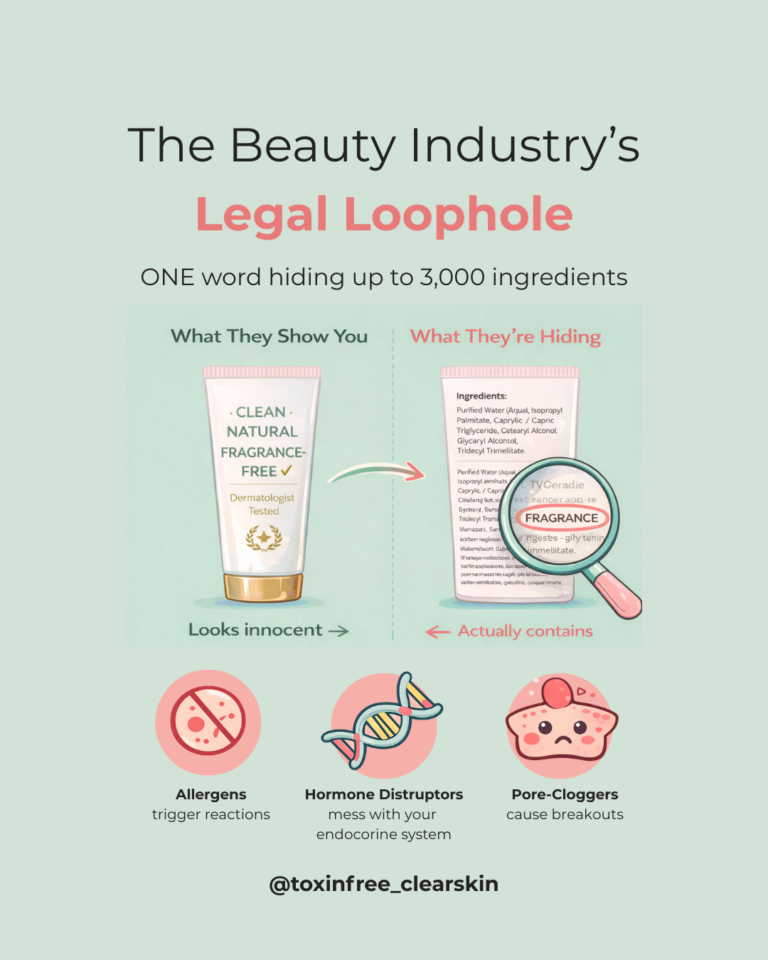
But here’s something even more important: even when people switch to gentler or “cleaner” products, they often still run into trouble. Because many products that are free of harsh chemicals still contain pore-clogging ingredients. Coconut oil, cocoa butter, algae extract, these are natural, but they can still block pores and feed the inflammation cycle.
This is why the dual methodology I use in my ingredient checker matters so much. It’s not enough to just remove toxic ingredients from your routine. You also need to remove comedogenic ones. When your skin is already compromised from dehydration, pore-clogging ingredients do real damage.
If you haven’t run your current products through the Ingredient Microscope, I’d genuinely recommend starting there. I’ve had clients who couldn’t figure out why their “clean” routine was still breaking them out, and the answer was almost always a pore-clogging ingredient hiding in something they trusted.
What to Actually Do About Dehydrated Oily Skin
This isn’t a quick fix, and I’m not going to pretend it is. Rebalancing your moisture barrier takes time, usually a few weeks to a couple of months. But here’s what actually helps.
The first step is stopping the stripping. Swap your foaming or gel cleanser for something gentle and non-stripping. Look for cleansers that don’t leave that tight feeling. Your face should feel clean but comfortable after washing, not like you just squeezed every drop of moisture out of it.
Next, add hydration (not oil). There’s an important difference here. Humectants like hyaluronic acid attract water to the skin, which is what dehydrated skin actually needs. This is different from heavy oils or occlusives, which seal things in. For dehydrated oily skin, you want to add water, not more oil.
Then, make sure what you’re adding isn’t clogging your pores. This is where people get tripped up. You can find a gentle, hydrating product that’s still full of comedogenic ingredients. Before adding anything new to your routine, run it through the Ingredient Microscope to confirm it’s both non-toxic and non-comedogenic.
Finally, give it time. I know that’s hard to hear. But your skin isn’t going to rebalance overnight. If you stay consistent with a gentle, hydrating, non-comedogenic routine, you should start seeing less reactive oil production within a few weeks.
Building a Routine That Actually Works for Dehydrated Oily Skin
If you’re not sure where to start, the Routine Method I’ve put together is designed to help you find products that are vetted through both filters: toxin-free and non-comedogenic. It takes the guesswork out of figuring out what’s actually safe for your skin.
Because that’s the thing about dehydrated oily skin. It’s not that your skin is broken or that you’re doing everything wrong. You’ve probably just been working with incomplete information, information that the skincare industry has a financial incentive not to share clearly.
You deserve a routine that actually works with your skin instead of against it. And understanding the difference between oily skin and dehydrated oily skin is one of the most important first steps.
The Bottom Line
If you’ve been stuck in the oily-skin loop for years and nothing has worked long-term, please consider whether dehydrated oily skin might be what’s actually going on. The signs are easy to miss because the symptoms mimic oily skin so closely. But the fix is completely different.
Stop stripping. Add the right hydration. Make sure your products are both toxin-free and non-comedogenic. And give your skin the time it needs to settle back into balance.
You’ve already spent years trying things that weren’t working. This approach might finally be the one that does.
If you want help figuring out where to start, you can check your current products here or build a routine that’s vetted for your skin. I’m here to help you figure this out.